
Sales Cadence Beispiele fuer kleine B2B-Teams
Nutze 5 Sales-Cadence-Beispiele, eine Fit-Matrix und klare Stop-Regeln, bevor du den naechsten Follow-up schreibst.


Sales cadence examples should start with fit
Sales cadence examples are useful only when they match the account, signal, buyer path, and message quality. A copied 13-touch sequence can create noise if the account is weak. A 3-touch sequence can work when the timing is clear and the ask is easy.
Use this guide as a practical menu for small B2B teams. You will get 5 examples, a fit matrix, timing rules, a checklist, and a simple stop rule. The goal is not to send more touches. The goal is to choose the smallest cadence that gives a good-fit buyer enough context to answer.
Start every sales cadence with 4 checks. Score account fit, identify the signal, choose the likely owner, and decide what should happen if the buyer stays silent. When those 4 checks are visible, the cadence becomes a quality system instead of a calendar habit.
- Run the cadence only when the account score is high enough.
- Write the first message around one visible reason.
- Use each follow up for a different job.
- Stop when the next touch would add no new context.
The FTC CAN-SPAM guide is a useful baseline for commercial email because it covers truthful sender identity, subject lines, postal address, and opt out handling. Compliance belongs in the cadence before any volume increase.
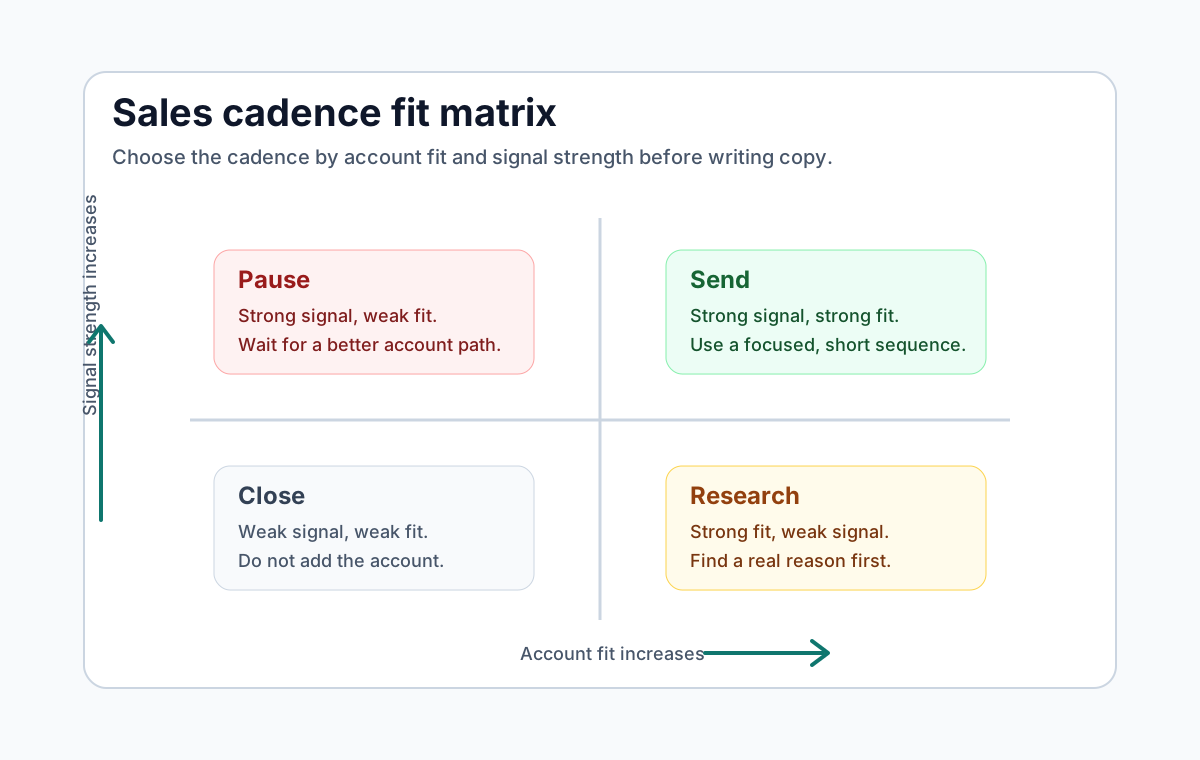
Sales cadence fit matrix
Pick the cadence from account fit and signal strength before choosing channels or copy.
1. Use a 3-touch fast reply cadence
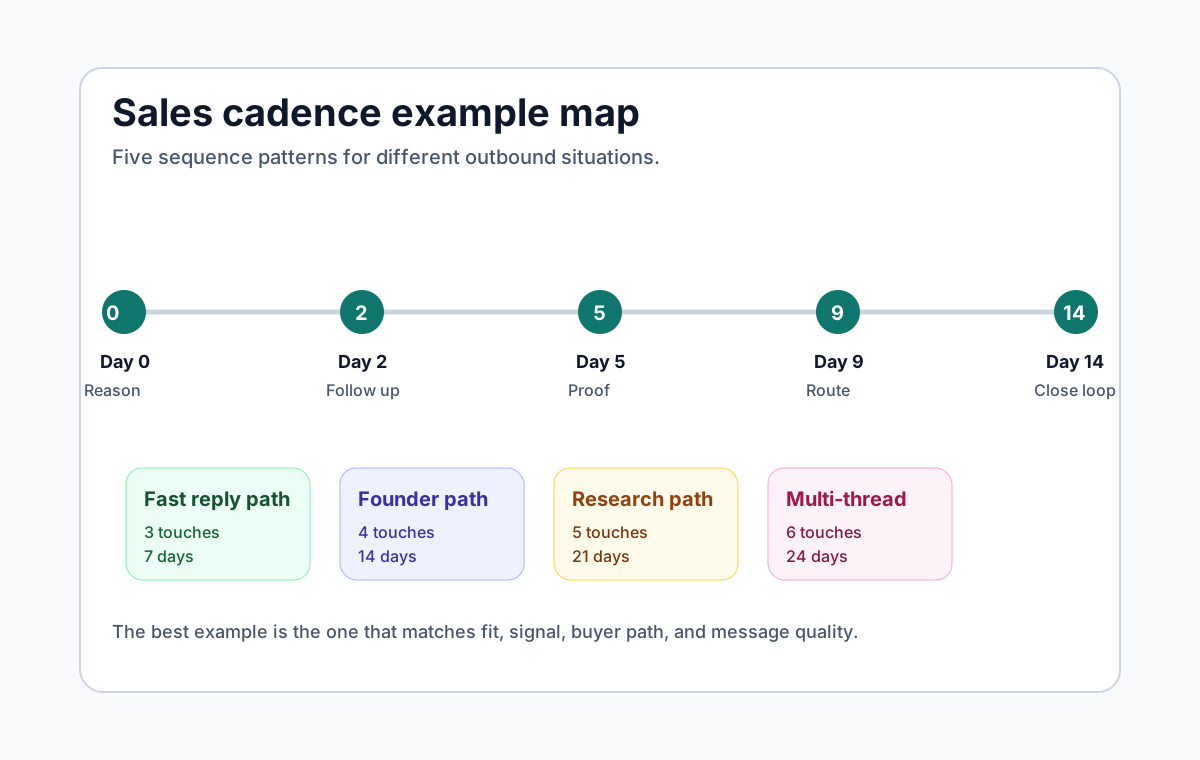
Use this example when the account is a strong fit and the signal is current. The 3-touch cadence works for founder-led teams because it creates a clear path without turning one prospect into a long campaign. It is best for small accounts, direct owner access, or a timely trigger.
Day 0 is the first email. Name the signal, connect it to one workflow, and ask one question. Day 2 is the follow up. Add one new detail or route question. Day 7 is the close-the-loop note. End the sequence unless a reply or fresh signal appears.
Example opening. I noticed your team is hiring for outbound support and wanted to ask how you decide which accounts deserve a second touch. Is that owned by you, or does someone else manage the handoff from research to messaging?
The fast path is useful because it limits pressure. It gives the buyer 3 easy chances to route, decline, or engage. If no reply appears after day 7, the account goes back to research until something changes.
Do not add a call, direct message, and long email to this path by default. The value is focus. If the reason is strong enough, the buyer should understand it quickly. If the reason needs 5 channels to make sense, the account probably belongs in a slower research-led cadence.
2. Use a 5-touch research-led cadence
Use this example when the account fit is strong but the signal needs more evidence. This cadence is slower because the first task is research quality, not activity. It fits larger accounts, complex buying groups, and cases where the first touch needs more context to feel relevant.
The sequence runs day 0, day 3, day 7, day 14, and day 21. Touch 1 names the workflow. Touch 2 adds proof or a useful observation. Touch 3 asks for the owner. Touch 4 shares a short checklist or example. Touch 5 closes the loop.
This cadence should never repeat the same pitch. Each touch needs a different job. One touch validates ownership, one adds a reason, one provides a decision aid, and one ends the sequence. If two touches have the same job, remove one.
A research-led cadence is strongest when every message can be read in under 45 seconds. Keep the note short, use one account-specific fact, and avoid links until the buyer has a reason to care.
This path also works when a founder is selling without a full sales team. The founder can write the first note, then delegate only the review and scheduling steps. That keeps the voice close to the business while still creating a repeatable process.
3. Use a warm outbound cadence
Warm outbound is not a permission slip to push harder. It means your message has visible context before the first email. The prospect may have engaged with content, appeared in a relevant discussion, shown a hiring signal, or matched a clear account pattern.
Use day 0, day 2, day 5, and day 14. The first note names the shared context. The day 2 follow up clarifies the workflow. The day 5 touch adds a useful example. The final note closes the loop and offers to send the short checklist if useful.
The important rule is restraint. A warm signal can expire quickly if the message sounds automated or invasive. Mention only context the buyer would reasonably understand, and connect it to a business workflow rather than personal behavior.
Sonarly fits this cadence because the product is built around signals, profile context, ICP fit, and message quality. Use the signal to decide whether the cadence deserves to run, then use the cadence to keep the outreach human.
4. Use a follow up cadence for silent prospects
Use this example after a decent first email gets no response. The mistake is treating silence as a reason to send more of the same. Silence usually means one of 4 things. The account is wrong, the owner is wrong, the timing is wrong, or the message was not useful enough.
Run a 4-step follow up cadence over 14 days. Day 2 asks whether the workflow sits with the recipient. Day 5 adds a practical reason. Day 9 offers a lighter route, such as a checklist or one-question review. Day 14 closes the loop.
Use a different sentence shape at each step. The first follow up can be direct. The second should add context. The third should make the ask smaller. The final note should end cleanly. This keeps the thread from becoming a stack of reminders.
Before each scheduled send, review account fit and signal strength again. If nothing new exists, skip the send. A skipped weak follow up is a quality win because it protects sender reputation and saves attention for better accounts.
The silent-prospect cadence should also capture owner corrections. If the recipient says another person owns the workflow, count that as useful signal. The cadence worked because it improved the route, even if it did not create a meeting that day.
5. Use a multi-thread cadence carefully
Use this example only when the account fit is high and the buying group is likely split across roles. Multi-threading works when it helps the buyer route the problem. It fails when it looks like pressure from multiple angles.
Start with one owner on day 0. If the role is adjacent but not decisive, use day 4 to ask for the right owner. If a second contact is clearly responsible, send a separate note on day 8 with a different angle. Close both paths by day 24 unless a reply creates a new reason.
Keep the internal note simple. Record who received which message, why they were contacted, and what the next step is. Do not let two people receive the same copy. Duplicate copy is the fastest way to make a thoughtful cadence look careless.
This cadence should include 6 touches at most across the account, not 6 touches per person. The account is the unit of judgment. If the account has no new signal after the close, stop.
6. Score each cadence before it runs
A cadence should earn its place before the first email goes out. Use a 10-point score. Give up to 3 points for account fit, 3 for signal strength, 2 for buyer path, and 2 for message quality. Run the cadence only when the score is 7 or higher.
Scores from 5 to 6 need research. Scores below 5 should close or wait. This rule sounds strict, but it keeps small teams from spending 30 minutes on an account that never should have entered the queue.
Google sender guidelines emphasize authentication, low spam rates, easy unsubscribe, and wanted mail. A scoring gate helps keep outreach aligned with what recipients are more likely to see as wanted.
The score also creates better learning. If a 9-point account does not answer, inspect the message. If a 6-point account answers, inspect the signal. Over time, this separates sourcing problems from copy problems.
Keep the score visible next to the sequence result. After 2 weeks, compare reply quality by score band. If low-score accounts generate most unsubscribes or owner corrections, tighten sourcing. If high-score accounts stay silent, improve the first touch before adding more steps.
7. Measure the cadence and stop cleanly
A useful sales cadence has a measurement plan and an ending. Track sent touches, replies, positive replies, owner corrections, unsubscribes, and meetings. Review the numbers every 2 weeks until the sequence has at least 100 accounts or enough signal to spot a clear pattern.
Do not optimize after 10 accounts. Small samples make every reply feel more important than it is. Look for repeated patterns instead. If replies come from owner-correction emails, your targeting needs work. If replies come from proof emails, your first message may be too vague.
Nielsen Norman Group research on scanning behavior is a reminder that readers skim before they commit. Use short paragraphs, front-loaded proof, and obvious questions so each touch can be understood quickly.
The stop rule is simple. Stop when the buyer says no, when the sequence reaches its final day, when the signal expires, or when the next message would add no new value. A clean stop is part of the cadence, not a failure of persistence.
- Review the highest-score accounts first.
- Rewrite the weakest message before adding a new touch.
- Keep owner corrections as useful signal.
- Archive accounts that reach the stop rule without a fresh trigger.
Use Sonarly to keep cadence examples practical
Sonarly helps small B2B teams turn ICP context, social signals, account research, and outreach inputs into warmer sales conversations. That makes it a good fit for cadence work because the hardest decision is often what deserves to be sent at all.
Use Sonarly to narrow the account list, capture the signal, and draft a message around one clear reason. Then use the cadence examples here as operating patterns. The product path is simple. Better account context creates better first touches, and better first touches need fewer follow ups.
The best sales cadence examples do not ask you to choose between consistency and judgment. They give you a repeatable shape, then force the right review before each touch. Fit, signal, buyer path, and message quality decide what happens next.
Start with one cadence for 2 weeks. Keep the touch count small, record every outcome, and revise only the weakest step. A small cadence that your team can explain will beat a large cadence that only exists because a template said so.
Sources
FTC CAN-SPAM compliance guide for sender identity, subject line, address, and opt out requirements.
Google sender guidelines for authentication, spam-rate, unsubscribe, and wanted-mail expectations.
Nielsen Norman Group reading-pattern research for scannability and front-loaded copy guidance.
Frequently asked questions
A sales cadence example is a planned sequence of outreach touches with timing, channel, message purpose, and a stop rule. A useful example shows when to use the sequence, not only how many emails or calls to send.
The best outbound cadence matches account fit and signal strength. For many small B2B teams, 3 to 6 touches over 7 to 24 days is enough when every touch adds a new reason or clearer route.
Use the smallest number that keeps the buyer path clear. Strong fit and strong signal may need 3 touches. Larger accounts may need 5 or 6 account-level touches. Stop when the next message adds no value.
A follow up is one message after a previous touch. A cadence is the full operating plan around those touches, including timing, channel choice, owner routing, quality checks, and the rule for when to stop.
Track sent touches, replies, positive replies, owner corrections, unsubscribes, and meetings. Review results by account score so you can separate sourcing problems from message problems before changing the sequence.