
Checklist de prospection outbound
Utilisez une checklist pratique pour evaluer le fit compte, le timing, le parcours acheteur, le canal et le suivi.


Outbound prospecting works when the list is smaller
Outbound prospecting is the work of choosing accounts, finding the right person, and starting a relevant conversation before the buyer asks for help. The mistake is treating it like a volume game. For small teams, the better move is to run a tighter checklist, reject weak prospects early, and send only when the account, signal, buyer path, and first question line up.
Use this page as a practical quality gate. Start with 50 account candidates, score the best 20, and send only the 10 prospects that pass the readiness score. That rhythm keeps outbound sales useful without pushing the team into generic messages or channel spam.
The checklist is built for founder-led and small B2B teams. It does not assume a large SDR team, a giant database, or a campaign factory. It assumes you need a repeatable way to decide who deserves time today and why they might answer.
Why the quality gate matters
6sense research says buyers complete about 70% of the buying journey before they speak with sellers. That does not kill outbound. It means your first touch needs a clear reason to interrupt the buyer at the right moment.
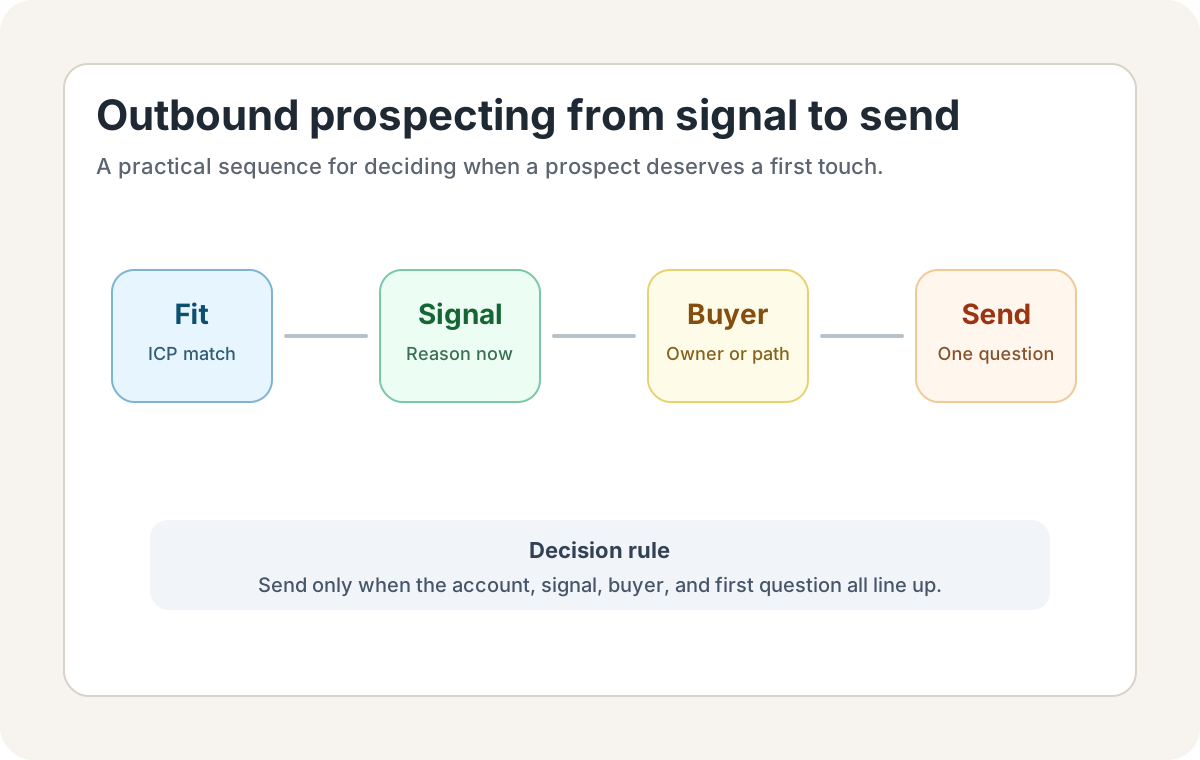
The outbound prospecting checklist
The checklist has seven steps. Each step should produce a decision, not a paragraph of notes. If a prospect fails a step, revise the research or reject the account before writing copy. Strong outbound is usually won before the first sentence is drafted.
- Fit, the account matches your ICP and exclusion rules.
- Signal, there is a recent reason to write now.
- Buyer, the person owns the problem or can route you to the owner.
- Channel, the first touch matches where the signal appeared.
- Message, the first touch asks one useful question.
- Follow-up, the second touch adds new context instead of repeating.
- Learning, the outcome feeds the next batch.
RAIN Group reports that 82% of buyers accept meetings with sellers who reach out. The useful lesson is not that every buyer wants a meeting. It is that relevant outreach can still work when it reaches a buyer with a timely reason and a clear next step.
1. Define the account fit before looking for names
Start with account fit. A prospect should not enter your outbound queue just because a title looks right. The account needs to match the market, size, region, maturity, workflow, and problem pattern where your product can help. If those fields are vague, every later step becomes harder.
Write the ICP in checks a teammate can apply in under 3 minutes. Good checks are observable. They include employee range, region, business model, team structure, hiring pattern, public technology, funding stage, category, and exclusion rules. Weak checks sound like growing fast or innovative company.
A strict account filter protects message quality. When fit is weak, the first touch has to work too hard. The message becomes broad, the question becomes generic, and follow-up turns into repetition. Rejecting early is cheaper than repairing weak personalization later.
Keep an explicit disqualification column beside the fit fields. Use it for accounts that look exciting but break the rules, such as the wrong geography, no reachable owner, a business model you cannot serve, or a team that is too small to feel the problem. This prevents edge cases from quietly entering the send queue.
The best account-fit review also protects positioning. If your product helps teams act on social and account signals, an account with no observable signal trail needs more research before outreach. Do not force a signal just because the logo looks attractive.
2. Find a current signal before choosing the channel
A current signal explains why this account deserves attention now. It can be a hiring move, funding event, new office, product launch, leadership change, tool migration, public post, job ad, event appearance, content engagement, or repeated activity around the problem you solve.
The signal does not need to prove intent on its own. It needs to make the first question reasonable. A hiring plan can justify a question about pipeline workflow. A public post can justify a question about a current pain. A product launch can justify a question about target accounts or outreach timing.
Record the signal in one sentence. If you need three sentences to explain the reason, it is probably not ready. The best outbound sales process keeps the evidence simple enough to audit later. The note should make sense even when someone else reads it next Friday.
Rank signals by closeness to the problem. A public complaint, active hiring plan, new market push, or repeated topic activity is usually stronger than a generic funding announcement. A signal is useful only when it helps you form a specific first question.
Do not confuse freshness with relevance. A signal from this week can still be weak if it says nothing about the workflow you solve. An older signal can still be useful if it explains a current transition, but you should confirm that it has not expired before you send.
3. Pick the buyer and the route to the buyer
After account and signal fit, choose the buyer. Do not default to the highest-ranking person. Choose the person who owns the problem, feels the workflow pain, or can route you to the owner. In a small company that might be the founder. In a larger account it might be sales leadership, RevOps, marketing, operations, or a team lead.
Add one backup route for every strong account. The backup is not a second person to spam. It is a practical path if the first person is adjacent to the problem but not responsible for it. A clear route keeps prospecting from stalling when one title assumption is wrong.
Write the buyer logic before the message. A simple line is enough. For example, sales leadership owns reply quality, while RevOps owns routing and reporting. That line helps you avoid vague outreach and keeps the ask tied to real responsibility.
If you cannot identify an owner, write to the route instead of pretending certainty. A routing message is different from a pitch. It asks who owns the workflow, names the reason you thought the account might care, and gives the reader an easy way to redirect you.
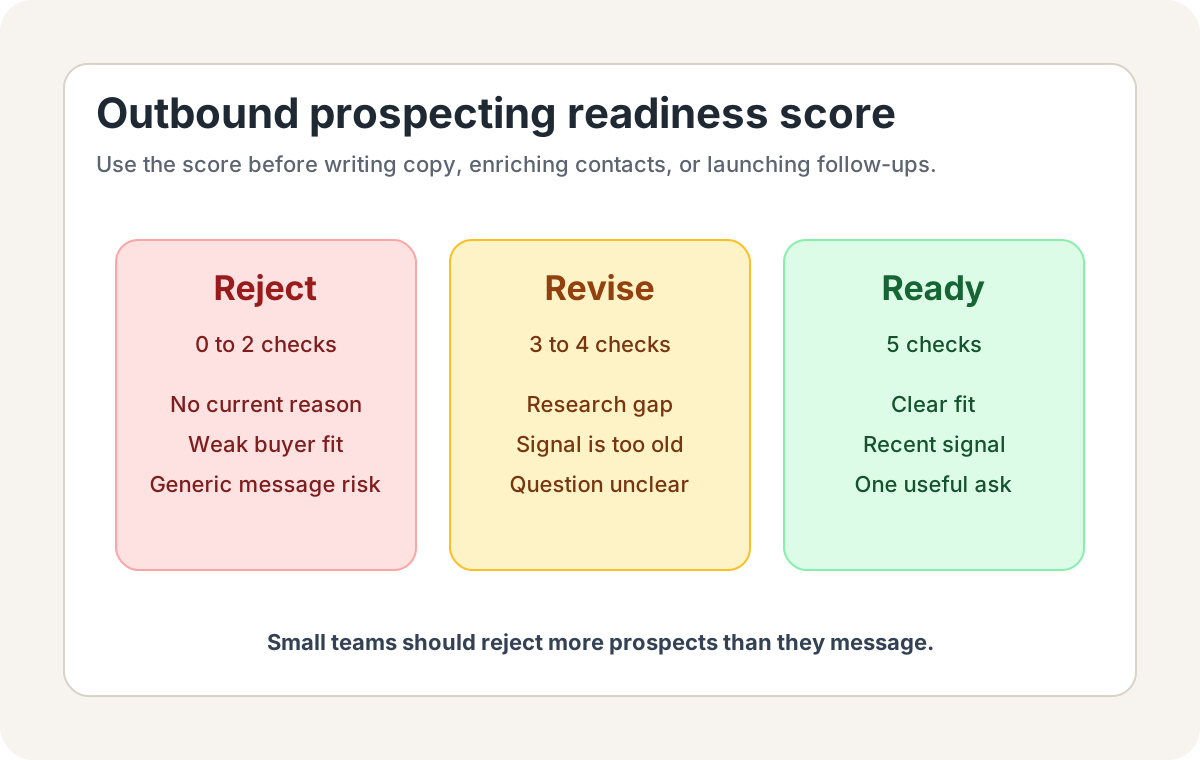
Outbound prospecting readiness score
Score every prospect before copy work starts. The score tells you whether to reject, revise, or send.
4. Score readiness before writing the first touch
Use five checks before copy work begins. Account fit, current signal, buyer path, channel fit, and one useful question. Send only when all five are present. Revise at three or four. Reject at two or below. This rule is intentionally strict because a small team cannot afford weak sends.
The readiness score turns subjective prospecting into an auditable decision. A prospect with a perfect title but no current signal is not ready. A strong account with no buyer path is not ready. A signal with no clear question is not ready. The score prevents optimism from becoming poor outreach.
This is also where you avoid the broad outbound prospecting tools trap. Tools can help with research, enrichment, and delivery, but they cannot decide whether the reason is useful. Make the send decision from evidence first, then use tooling to speed the clean work.
Keep the score visible in your CRM or working sheet. A simple 5-check column is enough. The value is not reporting polish. The value is that every teammate can see why a prospect moved forward and which missing check blocked the rest.
The five-check send rule
Send at 5 of 5. Revise at 3 or 4. Reject at 2 or below. The goal is not to make every prospect pass. The goal is to protect the buyer experience and learn from the rejected accounts.
5. Match the channel to the signal
Choose the first channel from the signal, not from habit. If the signal appeared in a public post, a short social touch may feel natural. If the signal came from a hiring page, funding note, or website change, email may give enough room to connect the dots. If trust matters more than speed, ask for an introduction.
This rule makes warm outbound more practical. Warm does not mean the buyer knows you. It means the message has a real context path. The channel should make that context easy to understand without making the buyer feel watched.
Keep the first touch low pressure. A useful outbound prospecting message often asks for a correction, a pointer, or a yes-no answer. It should not force a demo decision before the buyer has agreed that the problem is real.
Channel fit also affects timing. A public social signal may deserve a same-day touch because the context is still fresh. An account-level signal may need a slower email with clearer framing. A referral path may need preparation before any direct message is sent.
- Use email when the signal is account-level and needs context.
- Use social when the buyer created or joined the signal.
- Use referral when trust is the main barrier.
- Use phone when urgency and account value justify interruption.
6. Write one message from one reason
Do not stack every piece of research into the first message. One reason is stronger than a crowded proof dump. Use a simple structure. Start with the signal, name the likely workflow pressure, and ask one useful question. Keep the first touch short enough to read on a phone.
A good first question gives the buyer an easy way to answer. Ask whether the problem sits with their team, whether the timing is relevant, or whether there is a better owner. Avoid asking for a meeting before the buyer has confirmed the context.
The same rule applies to follow-up. Do not repeat the first message with different wording. Add one new useful piece of context. That might be a second signal, a short example, a relevant tool, or a clearer reason the question matters now.
A strong first touch should be easy to decline. That may sound counterintuitive, but it improves reply quality. When the buyer can correct your assumption quickly, you learn whether the account is worth more work, whether another person owns the problem, or whether the timing is wrong.
7. Review each batch and sharpen the next one
Outbound prospecting improves when every batch teaches you something. Review the batch every week. Count candidates added, prospects scored, messages sent, useful replies, bad-fit replies, and silence. The learning is in the gaps between those numbers.
If many candidates fail account fit, your search inputs are too broad. If many fail buyer path, your persona logic is weak. If many fail current signal, your timing sources need work. If useful replies are low even at 5 of 5, the message or question is not clear enough.
A simple weekly loop is enough. Add 50 account candidates, score 20, send 10, and write one learning note. That rhythm gives small teams enough data to improve without turning prospecting into a factory.
Review rejections as seriously as replies. A rejected account can reveal a weak ICP field, a bad source, or a signal that looked stronger than it was. Those lessons prevent the next batch from repeating the same mistake at a larger scale.
How Sonarly makes this workflow easier
Sonarly is built around signal-based outbound. The practical job is to turn scattered account context, social activity, ICP clues, and outreach inputs into a message that feels specific without becoming invasive. This checklist gives the decision layer before that message is created.
Use the ICP Generator before list building. Use LinkedIn and public activity only when they add context to the account or buyer. Use message templates only after the readiness score passes. That order keeps tooling in service of the buyer, not the other way around.
The outcome should be a smaller queue with better reasons. You will reject more accounts than you message. That is the point. Outbound prospecting works best when the team can explain why each first touch exists and what the buyer can do with it.
Sources
6sense B2B buyer research for buying-journey timing and buyer-initiated contact context.
RAIN Group sales prospecting statistics for buyer willingness to accept relevant seller meetings.
Gartner 2025 B2B buyer survey for buyer avoidance of irrelevant outreach.
Gartner 2026 B2B buyer survey for the rep-free buying preference benchmark.
Frequently asked questions
Outbound prospecting is the seller-led process of finding target accounts, choosing the right person, and starting a relevant conversation before the buyer asks for help. A strong process starts with account fit, a current signal, buyer path, and one useful first question.
Start with a narrow ICP, gather 50 account candidates, score the strongest 20, and send only the 10 that pass fit, signal, buyer path, channel, and message checks. Review every batch so the next list gets sharper.
Warm outbound starts from a visible reason, such as a trigger, public activity, referral path, or known account context. Cold outbound has less context. Warm does not mean the buyer knows you. It means the message has a relevant reason to exist.
No. Tools can help with ICP inputs, enrichment, signals, and message drafting, but they should not replace the send decision. Score account fit, current signal, buyer path, and first question before using tools to speed execution.