
Go beyond sender rotation with a complete prospect-to-reply system
HeyReach is excellent infrastructure for multi-sender LinkedIn outreach, agencies, workspaces, and sender rotation—and it now offers MCP. Sonarly adds the integrated audience, signal, approval, and conversation layer around execution.

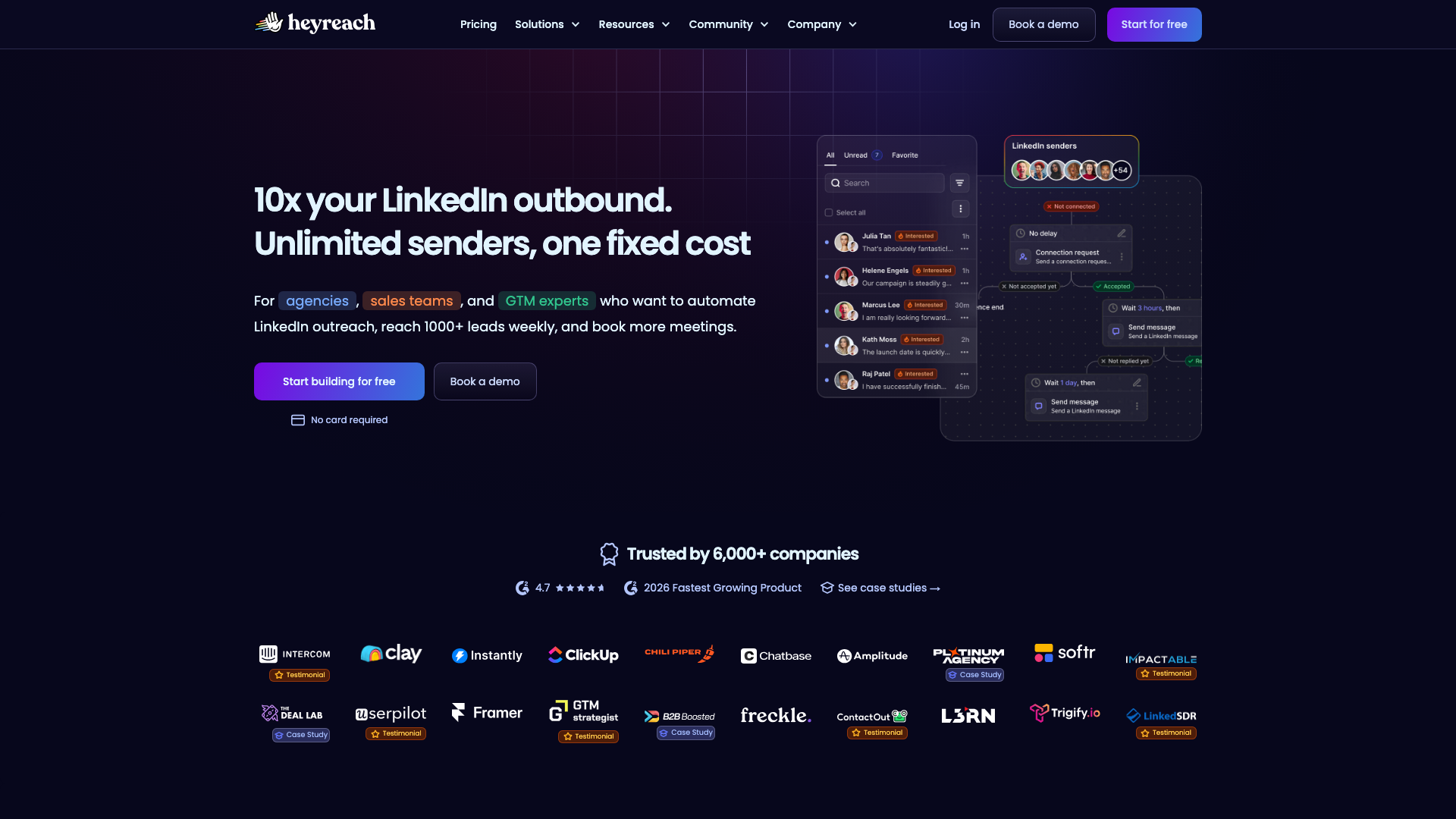
The short answer
Choose HeyReach when sender rotation, multi-account LinkedIn operations, agency workspaces, and proven execution infrastructure are the center of the purchase. Choose Sonarly when you also want integrated prospect data, reusable signal logic, approvals, and conversation operations in the same agent-ready lifecycle.
Is the bottleneck sender capacity—or deciding who to contact and why?
HeyReach is built to operate LinkedIn outreach across many senders and workspaces. Sonarly is built to connect the prospecting and decision layer to controlled execution and replies.
Give every sender a better reason to start the conversation
Sonarly connects audience discovery, signal reasoning, controlled multichannel execution, and reply handling so the team can optimize for conversations rather than disconnected activities.
HeyReach: where it is strongest
HeyReach is strong for agencies and outbound teams managing many LinkedIn accounts, sender rotation, shared inboxes, workspaces, permissions, integrations, API/webhooks, and MCP-based orchestration.
Make the buying signal useful—not merely visible
The advantage comes from carrying prospect and signal context into the message, approval, campaign, and reply workflow without rebuilding it between tools.
From prospect discovery to replies: Sonarly vs HeyReach
Compare how each product helps you find the audience, understand timing, create outreach, run campaigns, and manage replies.
Scale outreach with your AI agents
Sonarly is built as an agent-ready operating layer: discover prospects, evaluate signals, prepare outreach, approve content, launch campaigns, and review conversations through connected APIs and a bounded MCP surface.
- Find and enrich prospects from a 300M+ B2B database, Sales Navigator and LinkedIn sources, CSV files, or company websites.
- Evaluate five signal families and 45+ published intents, or define reusable custom signal specifications.
- Build campaigns from 16 selectable steps across conditions, waits, scans, approvals, LinkedIn actions, and Instantly email.
- Keep humans in control with review, approval, suppression, scheduling, activity history, and stop-on-reply behavior.
HeyReach officially provides an MCP server as well as API and webhooks, so it would be inaccurate to claim that Sonarly alone supports agents. The difference is scope: Sonarly's bounded MCP and lifecycle APIs connect prospecting, signals, preparation, approvals, campaigns, and conversations. Signal-triggered campaign start remains not generally available.
HeyReach: capabilities and commercial fit
Multi-sender campaigns
Rotate prospects across connected LinkedIn senders to distribute execution at team or agency scale.
Agency workspaces and permissions
Separate clients, teams, roles, and campaign operations inside purpose-built workspaces.
Unified inbox
Review and manage LinkedIn replies from multiple senders in one place.
API, webhooks, integrations, and MCP
Connect external automations and AI agents through officially documented integration surfaces.
Plans for growing sender fleets
Growth, Agency, and unlimited sender options target teams whose economics are driven by connected accounts.
Sonarly: make every sender part of an intelligent lifecycle
Start with the right audience—not another export
Use 300M+ B2B profiles or bring in Sales Navigator searches and lists, LinkedIn search and engagement, CSV files, and company websites. Sonarly connects the audience to enrichment, signals, campaigns, and conversations.
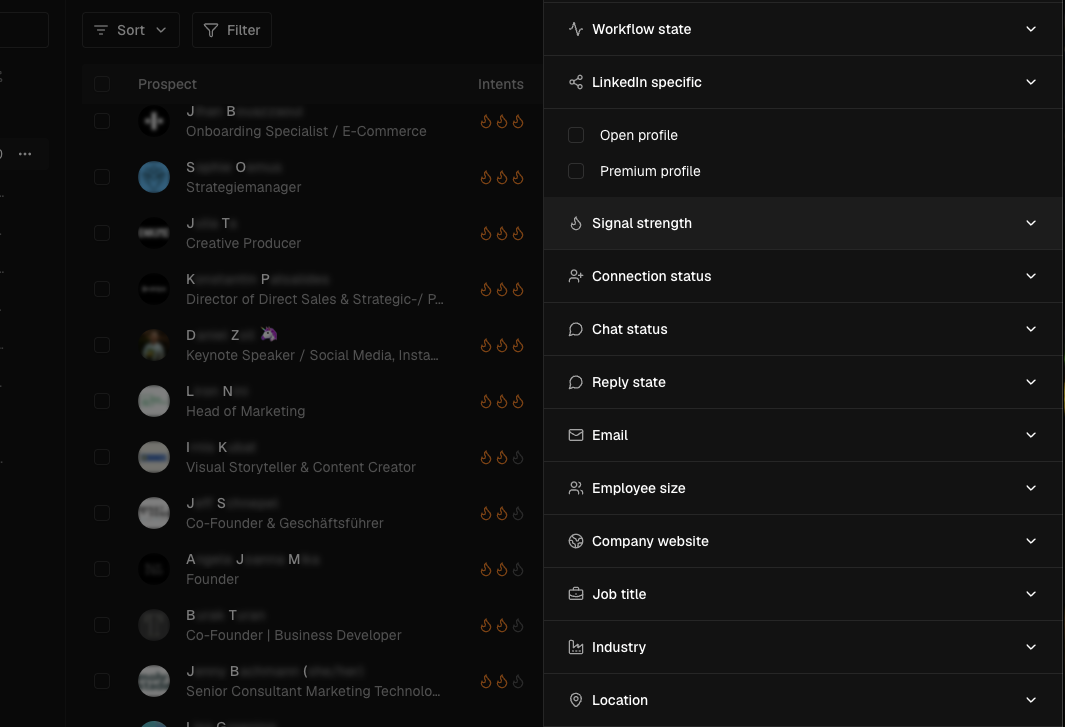
Know why each prospect is worth contacting now
Inspect signal sources and score reasoning, reuse custom specifications, and apply one-time scans, monitoring, or workflow checks. Signal-triggered campaign start is not yet generally available.
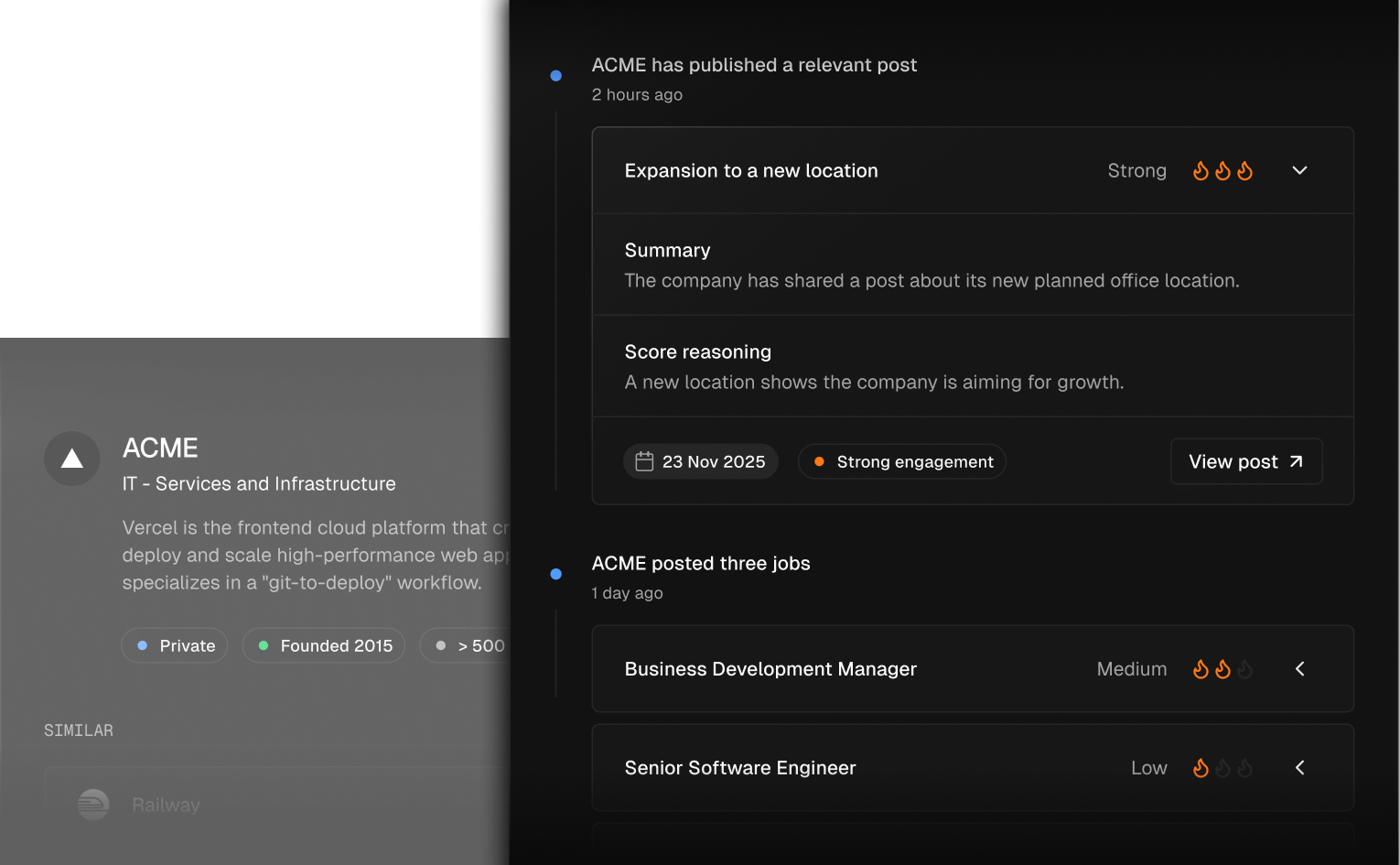
Turn context into controlled execution
Combine 16 selectable steps with approvals, LinkedIn actions, Instantly email, sender controls, scheduling, suppression, and stop-on-reply behavior.
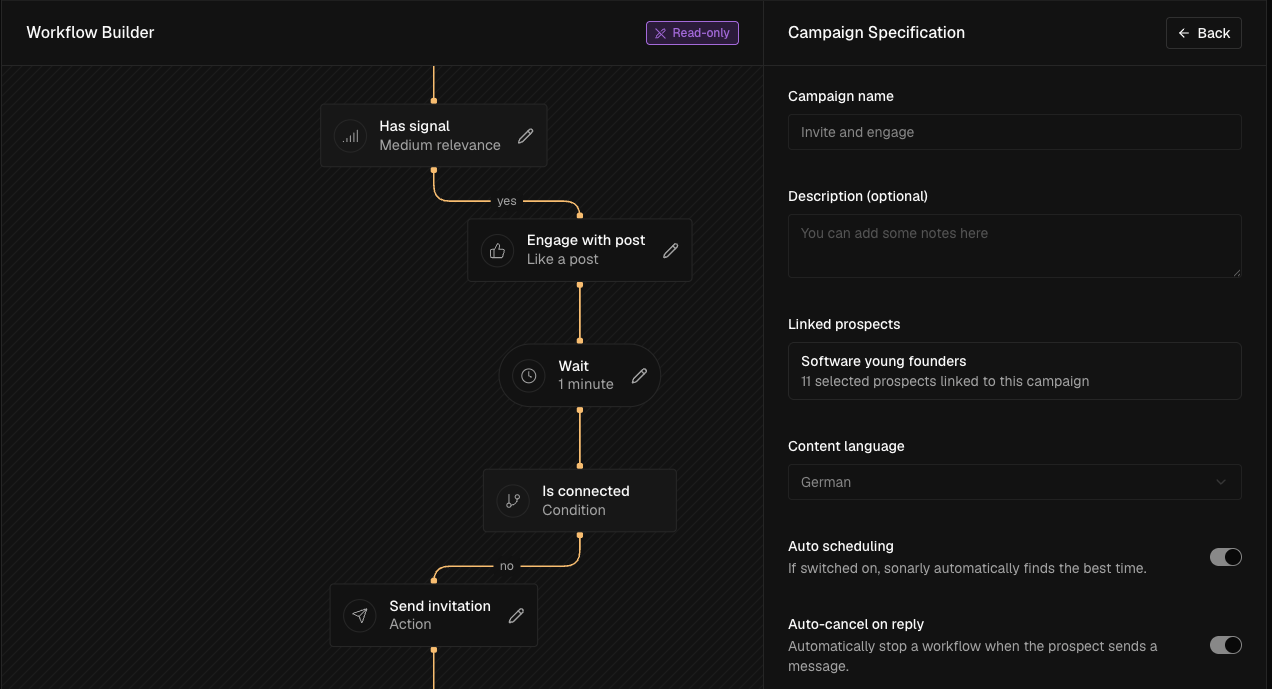
Commercial and operating fit: Sonarly vs HeyReach
Public pricing is only one part of the decision. Compare commitment, data, signal depth, workflow control, and extensibility.
Sources and verification
HeyReach capabilities and plan inclusions were checked against heyreach.io, its official pricing help center, and agency pages on July 16, 2026. HeyReach's MCP support is explicitly acknowledged. Sonarly claims follow the local Product Capability Inventory.
Choose the competitor when…
- Your main constraint is operating many LinkedIn sender accounts safely and centrally.
- You run agency workspaces and need sender rotation, roles, and client separation.
- Your audience and signal logic already live in other systems.
- You want HeyReach's documented API, webhooks, integrations, and MCP server.
Choose Sonarly when…
- You want the prospect database, signal reasoning, workflow, approvals, and replies connected.
- You need to decide who should enter outreach before assigning a sender.
- Your agents should work across the complete prospect-to-conversation lifecycle.
- You want LinkedIn execution plus conditional Instantly email and reusable signals.
Frequently asked questions
Choose HeyReach when sender rotation, multi-account LinkedIn operations, agency workspaces, and proven execution infrastructure are the center of the purchase. Choose Sonarly when you also want integrated prospect data, reusable signal logic, approvals, and conversation operations in the same agent-ready lifecycle.
Sonarly advertises an integrated 300M+ B2B database and accepts Sales Navigator, LinkedIn, CSV, and website sources. HeyReach is primarily the multi-sender execution layer and commonly receives audiences from LinkedIn or connected prospecting systems.
HeyReach officially provides an MCP server as well as API and webhooks, so it would be inaccurate to claim that Sonarly alone supports agents. The difference is scope: Sonarly's bounded MCP and lifecycle APIs connect prospecting, signals, preparation, approvals, campaigns, and conversations. Signal-triggered campaign start remains not generally available.
Compare the number of connected sender accounts and agency workspaces, not only the base subscription. HeyReach's economics scale with sender capacity; Sonarly's entry starts at €39/month and includes a broader prospect-and-signal lifecycle. Verify both live plans.
Your main constraint is operating many LinkedIn sender accounts safely and centrally. You want the prospect database, signal reasoning, workflow, approvals, and replies connected.